Far from being a simple commercial choice or a recent trend, this custom traces its roots back to the Middle Ages and conceals a fascinating mix of illiteracy, royal laws, heraldry, and popular superstition.
Pub names act as small time capsules that tell the social, political, and cultural history of the place where they were founded.
The Law of the Sign: When Reading Was Not an Option
In the 14th century, the vast majority of the European population could neither read nor write. However, taverns and inns were essential places for travelers to rest, for trade, and for the supply of fresh ale.
To solve the identification problem, King Richard II of England enacted a law in 1393 requiring all establishments that brewed and sold ale to hang a visible sign on their facade. The main goal was for city inspectors to easily locate the premises and inspect the quality of the drink. Unable to use words, tavern keepers turned to clear illustrations easily recognizable by any passerby; a lion, a crown, a rooster, or an oak tree.
Royal Heraldry and Loyalty to the Crown
Many of the most repeated names today have origins directly linked to royal houses and feudal lords of the era:
- The Red Lion (The Red Lion):
This is the most common pub name in the English speaking world. Its popularity skyrocketed when King James I ascended the throne in 1603 and decreed that public buildings display the red lion of Scottish heraldry as a sign of loyalty to the new dynasty.
- The Royal Oak (The Royal Oak):
This name commemorates the famous 1651 episode in which the future King Charles II hid in the branches of a large oak tree to escape parliamentary troops following the Battle of Worcester.
- The Crown (The Crown):
A highly practical choice. Hanging a crown on the facade guaranteed that the venue demonstrated its allegiance to the monarchy, avoiding political trouble regardless of which king or queen held the throne.
The Connection to My Bar
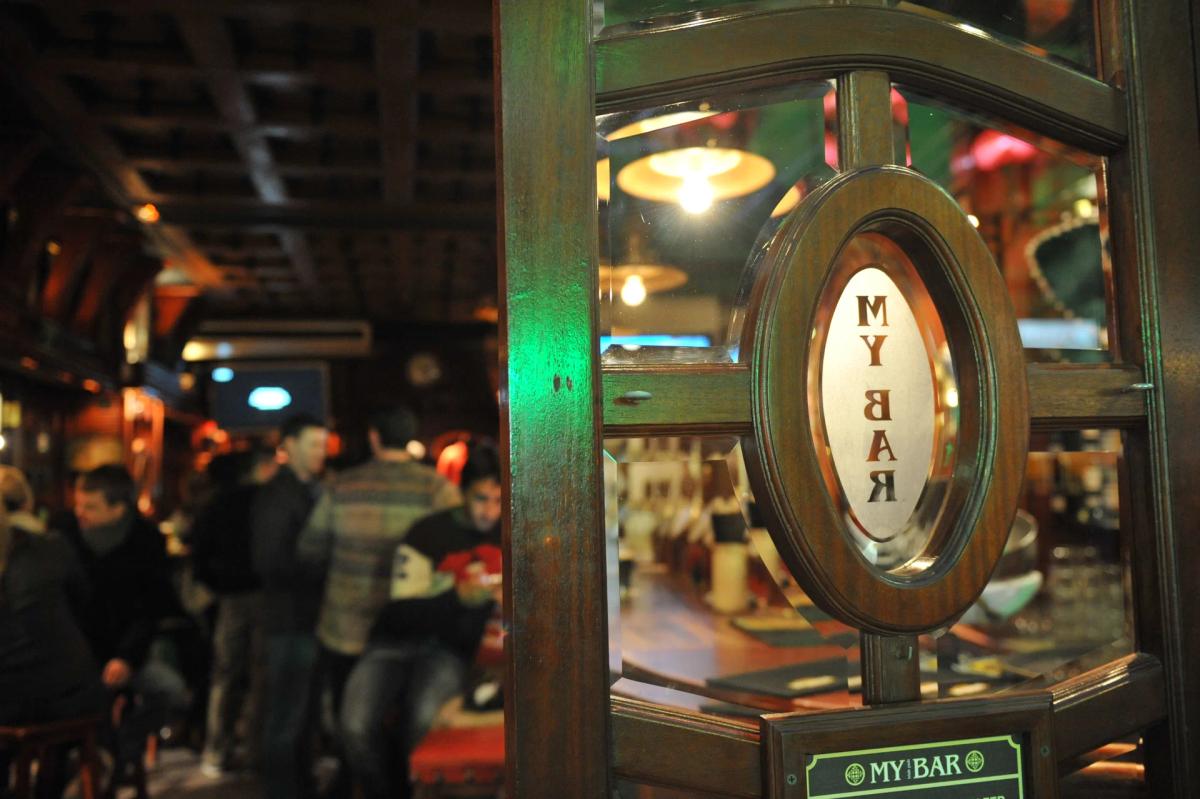
At My Bar, located on the iconic Carrer de Ferran in the heart of the Gothic Quarter, we keep this rich international pub tradition alive.
The venue's name directly reflects the philosophy of classic hospitality: creating an inviting, welcoming space where every customer whether a local neighbor or a traveler visiting Barcelona for the first time feels right at home. Beneath a traditional sign and behind its wooden doors, My Bar connects the historical heritage of pub culture with a modern atmosphere, offering draught beers, live sports broadcasts, and comforting food right in the heart of the city.
From Guild Symbolism to Popular Tales
Not all names originated from royalty. Many venues adapted their signs to attract specific groups of workers or to reflect local legends:
Names like The Mason's Arms or The Bricklayers indicated that the pub was the usual meeting point for members of those guilds after their workday. On the other hand, curious names like The Elephant and Castle were born from the popular corruption of foreign phrases or from memories brought back by traders returning from distant routes.