From Medieval Filí to Community Seanchaí
During medieval Gaelic Ireland, society was structured through a strict order of poets and sages called Filí. These storytellers belonged to a privileged caste responsible for memorizing laws, clan genealogies, and epic deeds (such as those compiled in the Ulster Cycle or the sagas of Fionn Mac Cumhaill).
With the dissolution of the Gaelic order in the 17th century and the Penal Laws, the formal figure of the poet evolved into the rural Seanchaí.
-
The Role of Fire and Conversation: The seanchaí traveled from village to village or sat by the turf fire in the homes of the village. His stories combined documented historical facts with folklore, travel tales, and moral teachings.
-
The Collection of the Irish Folklore Commission: In 1935, the Irish government founded the Irish Folklore Commission (Coimisiún Béaloideasa Éireann), managing to catalog more than three million pages of oral tradition manuscripts. This work is now recognized by UNESCO as one of the most important intangible heritage archives in the world.
The Neurobiology of Storytelling and the 'Craic' Culture
In the Irish language, the word craic does not only refer to fun but to a specific form of fluid, witty conversation filled with shared stories.
-
Neural Coupling: Various studies from Princeton University suggest that when a person listens to a well-articulated story, the brain activity of the listener synchronizes with that of the storyteller. Oxytocin (associated with empathy) and dopamine are released, making the social experience rewarding.
-
Acoustic Environment Without Interference: For a story to be understood and engage the listener, the environment requires a space shielded from stressful noise, where voices can cross at a natural and relaxed volume.
Shared Stories Around the Bar at MY BAR
In a multicultural metropolis like Barcelona, the historic center is a hotbed of stories from travelers, residents, and people from all over the world. Recovering the spirit of traditional storytelling does not mean staging theatrical performances, but rather offering the right atmosphere where conversation is the true protagonist.
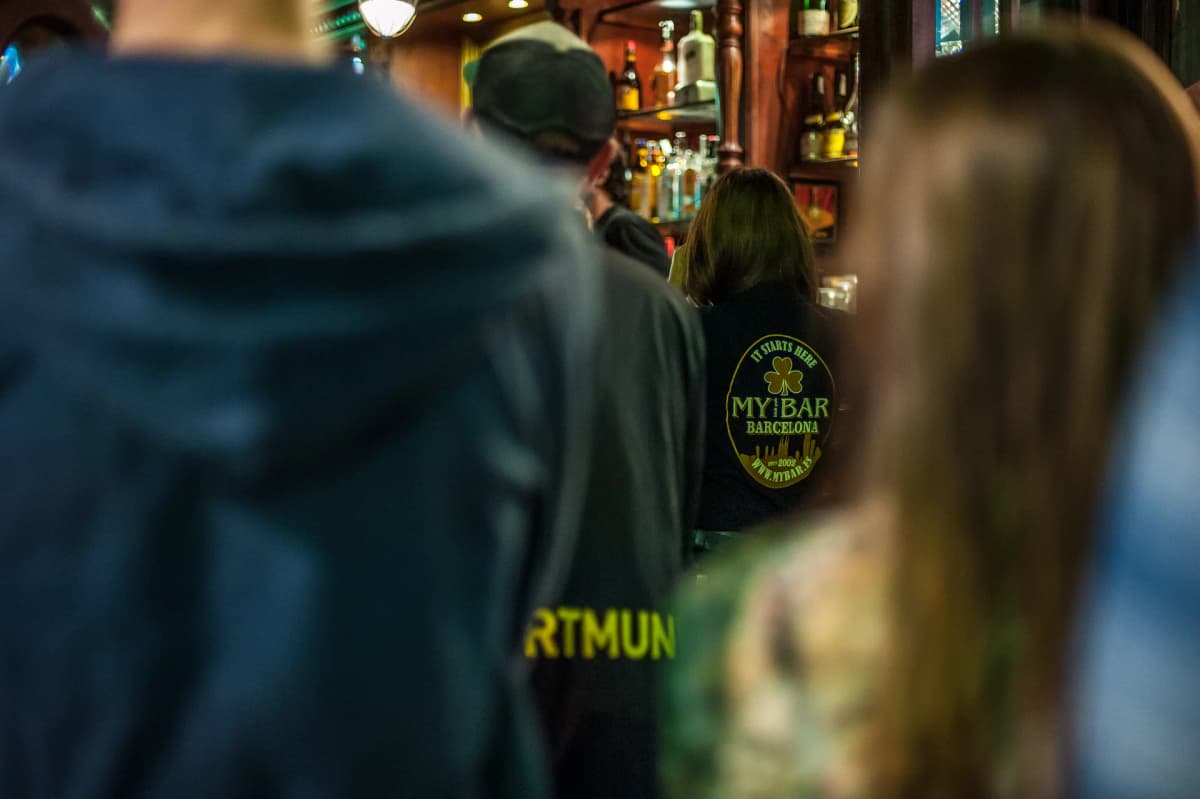
At MY BAR, the design of the space evokes that classic warmth, with seating designed for proximity, soft lighting that invites pause, and a cozy environment where one can enjoy a pint, eat something comforting, and share anecdotes from the day in a relaxed manner.
Sources
- https://www.irishfolklore.ie
- https://ich.unesco.org
- https://neuroscience.princeton.edu